Blog

  • YouTube Monetization Requirements 2026 : What Actually Changed

    YouTube Monetization Requirements 2026 : What Actually Changed

    If you’ve been Googling “YouTube monetization requirements 2026” you’ve probably found a dozen articles that paste the same old checklist and call it a day. This isn’t that.

    In this guide, we break down exactly what changed, what stayed the same, what the two tier system actually means for small creators, and what the new “inauthentic content” crackdown means for your channel right now. We’ll also show you how to check any channel’s monetization status instantly for free.

    This article is a part of our complete YouTube Monetization for Beginners in India 2026 step by step guide

    The Quick Answer: YouTube Monetization Requirements 2026

    There are now two tiers to the YouTube Partner Program (YPP). Here’s the fast version:

    RequirementTier 1 (Fan Funding)Tier 2 (Full Ad Revenue)
    Subscribers5001,000
    Public videos (last 90 days)3No minimum
    Watch hours (12 months)3,0004,000
    OR Shorts views (90 days)3 million10 million
    AdSense account✅ Required✅ Required
    2-step verification✅ Required✅ Required
    Community Guidelines strikesZero active strikesZero active strikes
    Eligible country✅ Required✅ Required

    What Tier 1 unlocks: Super Chats, Super Thanks, Super Stickers, Channel Memberships, YouTube Shopping affiliate. No ad revenue yet.

    What Tier 2 unlocks: Everything above, plus full ad revenue sharing (55% on long-form, 45% on Shorts), and YouTube Premium revenue.

    Now let’s get into what actually changed.

    What Actually Changed from 2025 to 2026

    Most creators asking this question want to know: is it harder or easier to get monetized now? The honest answer is: both, depending on what type of creator you are.

    Here are the three real changes that matter:

    1. The two-tier system is now the default

    This wasn’t new in 2026 YouTube started rolling it out in 2023 but by 2026, the expanded Tier 1 (500 subscribers) is fully available across most eligible countries. If you haven’t heard about it, this is the biggest thing you’ve been missing. Smaller channels can now earn through fan funding features before hitting the 1,000-subscriber threshold.

    2. “Repetitious content” was renamed to “inauthentic content” and it changed scope

    On July 15, 2025, YouTube officially updated its monetization policy language. The policy formerly called “repetitious content” was renamed “inauthentic content” and expanded in scope. This change affects channels using mass produced, AI-generated, or low-effort content more broadly. We go into the full detail in its own section below it matters a lot.

    3. AI content disclosure is now mandatory and enforced

    If your content includes realistic synthetic or AI generated elements a voiceover, an AI reconstructed face, fake news style segments you must disclose it using YouTube Studio’s “Altered or synthetic content” toggle. YouTube began enforcing this in 2024 and tightened it further in 2026. Non-disclosure can result in demonetization or removal from YPP.

    Tier 1 vs Tier 2: The Two-Door System Explained

    Think of YouTube’s Partner Program like a club with two entrances. The first door is easier to unlock and gets you inside with limited access. The second door opens the full experience.

    Tier 1: The Early Access Door (500 Subscribers)

    To get through this door, you need:

    • 500 subscribers (public or private both count)
    • 3 public videos uploaded in the last 90 days
    • 3,000 valid public watch hours in the past 12 months, or 3 million valid public Shorts views in the past 90 days

    What you get: Super Chat, Super Stickers, Super Thanks (viewers can tip you during live streams and on videos), Channel Memberships, and YouTube Shopping affiliate access.

    What you don’t get: ad revenue. That still requires Tier 2.

    This tier is particularly valuable for creators who have a highly engaged, smaller audience. If your 600 subscribers are loyal fans willing to buy memberships or send Super Thanks during live streams, you can start generating real income before you hit 1,000 subs.

    Tier 2: Full Monetization (1,000 Subscribers)

    To earn from ads, you need:

    • 1,000 subscribers
    • 4,000 valid public watch hours in the past 12 months, or 10 million valid public Shorts views in the past 90 days
    • A linked Google AdSense account
    • 2-step verification enabled on your Google account
    • No active Community Guidelines strikes
    • Channel located in a YPP-eligible country (120+ countries as of 2026)

    Once approved, YouTube pays you 55% of ad revenue on long-form videos and 45% of ad revenue on Shorts. You also earn a cut of YouTube Premium subscription fees when Premium members watch your content.

    YouTube Shorts Monetization: A Completely Separate Path

    This is where most creators get confused, and it’s important to get right.

    Shorts watch time does not count toward the 4,000 hour requirement. Full stop. Even if your Shorts are racking up millions of views and hours of total watch time, none of it applies to the long-form watch hour threshold.

    Shorts have their own completely separate eligibility path:

    • Tier 1 (fan funding): 3 million valid public Shorts views in the past 90 days
    • Tier 2 (full ad revenue): 10 million valid public Shorts views in the past 90 days

    A channel that posts only Shorts and hits 10 million views in 90 days can qualify for full ad monetization without a single long-form video. Once approved, Shorts earnings come from a shared ad revenue pool YouTube takes out music licensing fees, then splits the remaining revenue, giving creators 45%.

    One key phrase to understand: “valid public Shorts views.” Views from private videos, spam accounts, bots, or views generated through artificial means don’t count. YouTube audits these carefully at the application stage.

    The “Inauthentic Content” Rule That’s Getting Channels Rejected

    This is the single most important policy change you need to understand in 2026, and many creators aren’t aware of it until they get rejected.

    Before July 15, 2025, YouTube called it “repetitious content.” The rename to “inauthentic content” wasn’t just cosmetic it expanded the definition of what qualifies.

    What counts as inauthentic content?

    According to YouTube’s official policy update, inauthentic content includes:

    • Mass-produced content: videos that are clearly templated or auto-generated at scale
    • AI-generated videos with no human value added: a voiceover over stock footage with no original commentary, perspective, or creativity
    • Content that reads out other sources: videos that simply narrate Wikipedia articles, news stories, or other text without adding anything original
    • Pitch or speed-modified songs: taking existing music and slightly altering it to avoid Content ID, then re uploading
    • Recycled clips: reuploading other creators’ content, even with permission, without substantial original additions

    What is still allowed?

    YouTube’s Creator Liaison Rene Ritchie clarified that reaction videos, commentary, clips with original narration, compilations with original editorial framing, and educational content using clips are all still eligible as long as you’ve added significant original value.

    The key question YouTube asks: does this content bring something new, or is it a copy of something that already exists?

    If your content would give the viewer no reason to choose your video over watching the original source, it likely won’t pass the review.

    AI Content and Monetization: What YouTube Allows in 2026

    YouTube’s stance on AI content is more nuanced than the headlines suggest. The platform does not ban AI-generated content. It bans deceptive and low value AI generated content.

    What YouTube allows

    • Using AI to write, polish, or structure your script
    • AI generated thumbnails
    • AI tools for audio cleanup, noise removal, or enhancement
    • AI dubbing into other languages (YouTube itself provides this)
    • AI-assisted video editing
    • Using AI for research, topic generation, or SEO optimization
    • Voiceovers generated by AI as long as the content is original and disclosed

    The distinction YouTube draws is assistance vs replacement. If you’re using AI to help you create something genuinely original, you’re fine. If AI is replacing the creative direction, editorial judgment, and originality entirely, that’s where you run into problems.

    What gets you demonetized or rejected

    • AI-generated fake news style videos with no human fact checking
    • Deepfake videos where you haven’t clearly disclosed they’re synthetic
    • Mass uploaded AI content with identical structure, just different keywords swapped in
    • AI voiceovers on recycled clips from other platforms this is the combination that triggers the inauthentic content policy most often

    The disclosure rule

    If your video contains realistic synthetic content an AI generated face, an AI voice designed to sound like a real person, or AI reconstructed footage you must enable the “Altered or synthetic content” disclosure in YouTube Studio before publishing. This is mandatory and enforced. Missing it on a realistic AI segment isn’t a gray area anymore.

    What Watch Hours Actually Count (Most Creators Get This Wrong)

    The 4,000 watch hour requirement comes with conditions that aren’t always obvious.

    Hours that count:

    • Watch time on public long form videos
    • Watch time from live streams (once the stream ends and is set to public)
    • Watch time accumulated in the past 12 months

    Hours that do not count:

    • Shorts watch time (has a completely separate metric)
    • Watch time on private or unlisted videos
    • Watch time on deleted videos
    • Watch time older than 12 months
    • Watch time from spam or bot views

    You can track your progress in YouTube Studio under Analytics → Overview → Watch time. The metric shown there is your total, so filter it to the last 365 days to see your eligible hours.

    One often missed point: if you had 3,900 hours 13 months ago and barely posted since, those hours are rolling off your count. Watch hours are a rolling 12 month window, not a lifetime total.

    Other Requirements You Can’t Ignore

    Beyond subscribers and watch hours, YouTube checks several other factors during the review process.

    Google AdSense account: You must create or link an existing AdSense account before applying. You can’t receive payments without one. If you already have an AdSense account from a blog or another YouTube channel, you can link the same one.

    2-Step Verification: Your Google account must have two-step verification (2FA) enabled. This is a security requirement YouTube added to protect creator accounts and is a hard requirement your application won’t process without it.

    Community Guidelines compliance: Zero active strikes. Even one active strike at the time of application is grounds for rejection. Expired strikes won’t block you, but active ones will.

    Advertiser-friendly content: YouTube reviews whether your content is suitable for general advertiser placement. Consistently publishing content in restricted categories extreme violence, graphic content, controversial topics can result in rejection even if you technically meet the subscriber and watch hour thresholds.

    Eligible country: YPP is available in 120+ countries as of 2026. If you’re in a country where YPP is not yet available, you cannot apply regardless of your metrics. Check YouTube’s official support page for the current country list.

    Minimum 3 public videos (for Tier 1): You need at least 3 public videos uploaded in the last 90 days to qualify for the entry level tier. For Tier 2, there’s no minimum video count, but inactive channels take significantly longer to review.

    How to Check If You’re Eligible Right Now

    To check your own channel’s status:

    1. Go to YouTube Studio
    2. Click Monetization in the left menu
    3. You’ll see a progress tracker showing your subscriber count and watch hours against the thresholds
    4. If you meet all requirements, an Apply Now button will appear

    Once you apply, YouTube’s review typically takes 1 to 4 weeks, though it can extend during high-volume periods. You’ll receive an email when the decision is made.

    Want to check whether a competitor channel is already monetized? You can do that instantly and for free using Toolbil’s YouTube Monetization Checker. Enter any public channel name or URL and see its monetization status, estimated monthly earnings, CPM, subscriber count, and total views — no login required.

    Common Reasons YouTube Rejects YPP Applications

    Meeting the subscriber and watch hour numbers doesn’t guarantee approval. YouTube manually reviews your channel before accepting you. Here are the most common rejection reasons:

    1. Inauthentic or repetitious content. If a reviewer looks at your channel and sees videos that are clearly mass-produced, AI-generated without original value, or recycled from other sources, you’ll be rejected under the inauthentic content policy even if you technically hit 1,000 subscribers.

    2. Insufficient content for review. Channels with very few public videos make it hard for YouTube to assess quality and consistency. More content = faster, smoother review.

    3. Community Guidelines violations. Even old violations that didn’t result in strikes can flag your channel during review if they signal a pattern.

    4. Advertiser unfriendly content themes. Channels that primarily cover content in YouTube’s restricted categories (tobacco, gambling, dangerous activities, controversial topics) face heightened scrutiny.

    5. Clickbait thumbnails or titles. YouTube actively checks whether your titles and thumbnails accurately represent your content. Systematic mismatch between thumbnails and actual video content is a red flag.

    6. Linked AdSense account issues. If your AdSense account has been previously suspended or has outstanding policy violations, your YouTube application may be blocked until it’s resolved.

    If you get rejected, YouTube provides a rejection reason and allows you to reapply after 30 days. Use that time to address the specific issue flagged in the rejection notice — not just your metrics.

    How Much Does YouTube Pay After You’re Accepted?

    Getting accepted is just the beginning. Here’s what the actual revenue looks like:

    Long form videos: Creators keep 55% of ad revenue. RPM (revenue per 1,000 views) typically ranges from $1 to $10, depending heavily on niche and audience geography. Finance, tech, and business channels often see $8–$15 RPM, while entertainment and gaming channels typically see $1–$4.

    Learn more about Highest RPM YouTube Niches in 2026

    YouTube Shorts: Creators keep 45% of eligible ad revenue from the Shorts feed. Shorts RPM is generally lower than long-form because the ad format is less premium and the revenue pool is shared.

    YouTube Premium: When a Premium subscriber watches your content, you receive a share of their subscription fee proportional to how much of their viewing time was spent on your channel.

    Fan funding (Tier 1 features): Super Chats, Super Thanks, Super Stickers, and Channel Memberships pay out through AdSense. YouTube takes 30%, and you keep 70% of fan funding revenue.

    Frequently Asked Questions

    Does YouTube Shorts watch time count toward the 4,000-hour requirement ?

    No. Shorts watch time has its own separate threshold (10 million Shorts views for full monetization). It does not contribute to the 4,000 long-form watch hours.

    Can I monetize a YouTube channel in India or Pakistan in 2026?

    Yes. Both India and Pakistan are YPP-eligible countries in 2026. You can apply as long as you meet all other requirements.

    How long does the YouTube monetization review take?

    Typically 1 to 4 weeks after you apply. Reviews can take longer during high-volume periods. YouTube sends an email once a decision is made.

    Can I get monetized with only Shorts videos?

    Yes. If you reach 1,000 subscribers and 10 million valid public Shorts views in 90 days, you qualify for full YPP without any long-form content.

    What happens if I lose subscribers after I’m accepted?

    Once accepted into YPP, you keep your monetization status even if your subscriber count drops below 1,000 — as long as you continue following YouTube’s policies and community guidelines.

    Can AI-generated videos be monetized on YouTube in 2026?

    Yes, if they contain original value and comply with disclosure requirements. Pure AI-generated content with no human creative input or original perspective is likely to fall under the inauthentic content policy and be rejected.

    Is there a minimum number of videos required to apply?

    For Tier 1 (fan funding), you need at least 3 public videos uploaded in the last 90 days. For Tier 2 (full ad revenue), there’s no official minimum, but inactive channels with very few videos take significantly longer to review.

    What if my AdSense account was previously suspended?

    A suspended AdSense account will block your ability to monetize. You’ll need to resolve the AdSense issue before YouTube can approve your application.

    Summary: What You Need to Know in 2026

    YouTube monetization in 2026 is more accessible than it used to be but it’s also more quality conscious than ever. The two tier system gives smaller channels a real on-ramp to earning, and Shorts now offer a legitimate fast track path. But the inauthentic content policy is being enforced more strictly, and AI content that doesn’t add genuine human value is being filtered out at the review stage.

    The path to monetization is clear: build real content, add original perspective, disclose AI where required, stay within Community Guidelines, and hit either the long form or Shorts threshold. There’s no shortcut past the quality review.

    To check where you stand right now or to check if any competitor channel is already monetized use Toolbil’s free YouTube Monetization Checker. No login. No cost. Instant results.

    Sources: YouTube Help Center (channel monetization policies), YouTube Creator Academy, YouTube Partner Program official documentation, Rene Ritchie (YouTube Creator Liaison), reviewed and verified May 2026.
  • YouTube Sponsorship for Small Channels : The Ultimate Guide (2026)

    YouTube Sponsorship for Small Channels : The Ultimate Guide (2026)

    You Don’t Need 100K Subscribers to Get Sponsored

    One of the biggest myths in the creator economy is this: you need a massive audience to attract sponsors.

    Wrong.

    After spending over a decade working with content creators from solo gamers with 800 subscribers to mid-size lifestyle channels pushing 50K I’ve seen firsthand that subscriber count is only one piece of the puzzle. Brands today care far more about engagement, audience trust, and niche alignment than raw numbers.

    In fact, I’ve helped channels with under 2,000 subscribers land paid brand deals because they spoke to a hyper-specific audience that a brand desperately wanted to reach.

    This guide is the exact playbook I use with clients. Whether you run a gaming channel, a cooking channel, a study-with-me channel, or something in between youtube sponsorship for small channels with any niche is not only possible, it’s happening every single day.

    Let’s break it all down.

    This article is a part of our complete YouTube Monetization for Beginners in India 2026 step by step guide

    What Is YouTube Sponsorship? (And How It Actually Works)

    A YouTube sponsorship is a paid partnership between a content creator and a brand, where the creator promotes a product or service in their video in exchange for money, free products, or both.

    There are three main types of YouTube sponsorships:

    1. Dedicated Videos The entire video is focused on the sponsor’s product or service. These pay the highest rates but require full transparency with your audience.

    2. Integrated Sponsorships (Mid-Roll or End Mentions) The most common type a 30 to 90-second segment within your regular video promoting the brand. Often called a “sponsor segment” or “ad read.”

    3. Affiliate Sponsorships The brand gives you a custom discount code or link. You earn a commission every time someone buys using your code. Lower upfront pay but can generate passive income over time.

    Pro Insight: For small channels, affiliate and integrated sponsorships are the easiest entry points. Brands take less financial risk, and you build a track record that leads to bigger deals.

    Do Small YouTube Channels Really Get Sponsors? (The Truth)

    Yes and the data backs it up.

    The rise of the micro influencer economy has completely changed how brands allocate their marketing budgets. Studies show that micro-influencers (creators with 1,000–100,000 followers) generate up to 60% more engagement compared to mega influencers, according to influencer marketing research from Influencer Marketing Hub.

    Brands have caught on. Companies like NordVPN, Skillshare, Squarespace, and Audible have sponsored channels with fewer than 5,000 subscribers because those creators had a loyal, trusting audience in a specific niche.

    The three factors brands actually evaluate:

    FactorWhy It Matters
    Engagement RateComments, likes, and shares show audience trust
    Niche RelevanceA fitness brand wants fitness viewers, not random traffic
    Audience DemographicsAge, location, and income matter for brand targeting
    Content ConsistencyRegular upload schedule signals a professional creator

    A channel with 3,000 dedicated fitness subscribers is more valuable to a protein supplement brand than a channel with 50,000 passive viewers who never engage.

    How Much Do Sponsors Pay YouTubers? (Real Numbers)

    This is the question every creator wants answered, so let’s be transparent about it.

    YouTube sponsorship rates are typically calculated using CPM (Cost Per Mille) that’s the cost per 1,000 views or a flat fee per video.

    Industry Standard Sponsorship Rate Benchmarks (2026)

    Channel SizeTypical Sponsored Video Rate
    1,000 – 5,000 subscribers$50 – $300 per video
    5,000 – 20,000 subscribers$200 – $1,000 per video
    20,000 – 100,000 subscribers$500 – $5,000 per video
    100,000 – 500,000 subscribers$2,000 – $15,000 per video
    1M+ subscribers$10,000 – $50,000+ per video

    Important caveats:

    • Niche matters enormously. Finance, SaaS, and business channels typically earn 2–5x more than entertainment or gaming channels per 1,000 views because their audiences have higher purchasing power.
    • Average views per video, not subscriber count, is what most brands actually pay against. A channel with 2,000 subscribers averaging 10,000 views per video can command higher rates than a channel with 20,000 dormant subscribers averaging 500 views.
    • Negotiation is normal. Never accept the first offer from a brand. Counter at 20–30% higher.

    💡 Not sure what to charge? Use this free YouTube Sponsorship Calculator to instantly estimate your sponsorship rate based on your subscriber count, average views, niche, and engagement rate before you send a single pitch.

    Real-World Example: A personal finance channel I consulted for had just 4,200 subscribers but averaged 8,000 views per video. They secured a $750 sponsorship deal with a budgeting app because the audience demographic was exactly what the brand needed.

    Common YouTube Sponsors for Small Channels

    Not all brands require massive audiences. Here are the most common YouTube sponsors actively working with small creators:

    1. Software & SaaS Tools

    • Skillshare: Online learning platform, extremely creator friendly
    • NordVPN / Surfshark: VPN services sponsor across nearly every niche
    • Epidemic Sound: Music licensing for creators
    • TubeBuddy / VidIQ: YouTube growth tools (ideal if your niche is creator education)
    • Canva / Adobe Express: Design tools

    2. Finance & Fintech

    • Robinhood, Webull, Public.com: Great for finance and investing channels
    • Acorns, Stash: Ideal for personal finance or millennial money channels
    • CreditKarma: Works across broad audiences

    3. Health, Fitness & Wellness

    • MyProtein, Optimum Nutrition: Supplement brands for fitness channels
    • Noom, BetterHelp: Mental wellness and lifestyle niches
    • HelloFresh, EveryPlate: Meal kit brands (huge for cooking and lifestyle creators)

    4. E-Commerce & Lifestyle

    • Squarespace / Wix: Website builders sponsor across almost every niche
    • Amazon Associates (Affiliate): Entry-level for all niches
    • Fiverr: Freelancing platform sponsoring business and tech channels

    5. Gaming Specific Sponsors

    • G Fuel, Gamer Supps: Energy drinks for gaming channels
    • Razer, SteelSeries: Hardware brands (usually 10K+ subs required)
    • ExpressVPN: Extremely popular in the gaming space
    • NordPass: Password management, growing in gaming/tech niches
    • GameFuel, Corsair: Peripheral and lifestyle gaming brands

    Tip for Gaming Channels: YouTube sponsorship for small gaming channels is highly achievable with G Fuel and VPN brands specifically they have active micro influencer programs.

    Best Sponsors for Small YouTube Channels (Brand by Brand Breakdown)

    These brands have a documented track record of working with creators well below 100K subscribers. They are listed with estimated rates for small channels, their preferred niches, and minimum requirements.

    1. Audible (Amazon)

    Best for: Education, self-improvement, history, narrative, lifestyle, productivity

    Audible is one of the most small channel friendly sponsors on YouTube. Their affiliate program has essentially no subscriber minimum, and their paid sponsorship program regularly works with channels in the 10K–50K range. The standard deal is a 60 second integration with a custom URL and a free trial offer for viewers.

    DetailInfo
    Minimum subscribers~1,000 (affiliate); ~10K (paid)
    Deal typeAffiliate + flat fee hybrid
    Rate (10K–50K channel)$200 – $800 per integration
    NichesAlmost universal — finance, gaming, education, lifestyle
    Creative freedomHigh — creators have significant flexibility in delivery
    How to applyAudible Creator Program (direct)

    2. Skillshare

    Best for: Creative, design, coding, music, photography, career development

    Skillshare is a performance oriented partner: creators earn a flat fee per qualified sign up using a tracked link, plus sometimes a base fee. They work across a wide range of niches where skill-building is a natural fit.

    DetailInfo
    Minimum subscribersNo hard minimum (affiliate program open to all)
    Deal typePerformance-based (per sign-up) + base fee at higher tiers
    Rate (10K–50K channel)$100 – $600 per video
    CPM equivalent$10 – $20
    NichesCreative, design, tech, photography, productivity
    How to applySkillshare Affiliate Program (self-serve)

    3. Squarespace

    Best for: Business, entrepreneurship, freelancers, tech, creative niches

    Squarespace is one of the most active YouTube sponsors overall, with 1,900+ creator partnerships documented. They work across channel sizes including micro influencers, and they genuinely value creative execution a polished integration that showcases their product well can get you noticed even at lower subscriber counts.

    DetailInfo
    Minimum subscribers~10K for paid deals
    Deal typeFlat fee sponsorship or affiliate ($100–$200/referral)
    Rate (10K–50K channel)$500 – $2,000 per video
    CPM equivalent$15 – $50
    NichesBusiness, tech, design, travel, entrepreneurship
    How to applyPitch via their partnerships email or affiliate sign-up

    4. NordVPN & Surfshark

    Best for: Tech, gaming, privacy, cybersecurity, general entertainment

    NordVPN has been sponsoring YouTubers since 2012. Over 3,000 unique creators have run NordVPN integrations. Their strategy involves continuously rotating through new channels including small ones testing different audiences. They don’t limit themselves to tech channels; their target is audience demographics (25–34-year-olds with disposable income), not content category.

    DetailInfo
    Minimum subscribers~5K–10K for paid deals
    Deal typeFlat fee + affiliate commission stacked
    Rate (10K–50K channel)$300 – $1,200 per integration
    CPM equivalent$10 – $30
    NichesTech, gaming, education, finance, lifestyle, gaming
    How to applyNordVPN Affiliate Program or direct pitch

    5. HelloFresh

    Best for: Food, cooking, lifestyle, family, budget content

    HelloFresh is one of the top three most active YouTube sponsors overall, and a significant share of their deals are with channels under 100K. They are especially strong in food, lifestyle, family, and budget-focused niches, but have expanded into fitness and general lifestyle content.

    DetailInfo
    Minimum subscribers~10K for paid partnerships
    Deal typeFlat fee + affiliate code
    Rate (10K–50K channel)$300 – $1,500 per integration
    CPM equivalent$10 – $25
    NichesCooking, lifestyle, family, budget, health
    How to applyHelloFresh creator partnerships email

    6. BetterHelp

    Best for: Mental health, wellness, lifestyle, education, productivity

    BetterHelp is one of the most cross niche sponsors on YouTube. They appear across wildly different content categories because mental wellness is a universal need. They work with a very wide range of creator sizes.

    DetailInfo
    Minimum subscribers~5K
    Deal typeAffiliate + flat fee
    Rate (10K–50K channel)$200 – $1,000 per video
    CPM equivalent$10 – $22
    NichesAlmost any niche (extremely cross-category)
    How to applyBetterHelp creator program

    7. Brilliant

    Best for: STEM, education, science, math, coding, productivity

    Brilliant is a premium education platform that targets intellectually curious audiences. They command above-average rates in education and STEM niches and are known for working with small-but-engaged channels in these areas.

    DetailInfo
    Minimum subscribers~5K–10K
    Deal typeFlat fee + affiliate
    Rate (10K–50K channel)$300 – $1,200 per video
    CPM equivalent$12 – $25
    NichesSTEM, science, coding, math, education
    How to applyBrilliant creator partnerships page

    8. Ground News

    Best for: News, politics, education, current events, commentary

    Ground News is the fastest-growing YouTube sponsor by volume — logging 1,863 integrations in H1 2025 alone (+202% YoY). Their strategy is deliberately broad: if you have an engaged audience interested in news or current events, they want to work with you regardless of channel size.

    DetailInfo
    Minimum subscribersNo hard minimum reported
    Deal typeFlat fee + affiliate
    Rate (10K–50K channel)$200 – $900 per video
    CPM equivalent$10 – $20
    NichesNews, politics, education, tech, commentary
    How to applyDirect email to their partnerships team

    9. Manscaped

    Best for: Men’s lifestyle, fitness, comedy, gaming, personal care

    Manscaped has built one of the most recognisable YouTube sponsorship playbooks in the men’s lifestyle space. They’re known for giving creators significant creative latitude, which makes their reads feel natural rather than scripted.

    DetailInfo
    Minimum subscribers~10K
    Deal typeFlat fee
    Rate (10K–50K channel)$200 – $800 per video
    CPM equivalent$8 – $18
    NichesMen’s lifestyle, comedy, gaming, fitness
    How to applyTheir brand partnerships email

    10. Amazon Associates / Amazon Music / Twitch

    Best for: Any niche (most universal program)

    Amazon doesn’t run a single YouTube sponsorship program. Instead, several Amazon owned brands sponsor channels independently. Amazon Associates is the most accessible entry point an affiliate program open to any channel size with commission ranging from 1% to 10% on tracked sales.

    DetailInfo
    Minimum subscribersNone (Associates); varies per brand
    Deal typePrimarily affiliate (commission-based)
    Rate (10K–50K channel)Variable ($1–10% commission per sale)
    CPM equivalentVaries widely by product category
    NichesUniversal
    How to applyAmazon Associates Program (self-serve)

    Master Comparison Table: Sponsors for Small YouTube Channels

    BrandMin. SubsPayment TypeRate (10K–50K subs)CPM RangeBest NichesSmall Channel Friendly?
    Audible~1K (affiliate) / ~10K (paid)Flat + affiliate hybrid$200 – $800$10 – $20Education, lifestyle, almost universalExcellent
    SkillshareNone (affiliate)Performance + base fee$100 – $600$10 – $20Creative, design, codingExcellent
    Squarespace~10KFlat fee or affiliate$500 – $2,000$15 – $50Business, tech, entrepreneurshipVery Good
    NordVPN~5K–10KFlat + affiliate stacked$300 – $1,200$10 – $30Tech, gaming, education Very Good
    HelloFresh~10KFlat + affiliate code$300 – $1,500$10 – $25Cooking, lifestyle, family Very Good
    BetterHelp~5KAffiliate + flat fee$200 – $1,000$10 – $22Wellness, lifestyle, education Very Good
    Brilliant~5K–10KFlat + affiliate$300 – $1,200$12 – $25STEM, science, educationGood
    Ground NewsNo minimumFlat + affiliate$200 – $900$10 – $20News, commentary, techExcellent
    Manscaped~10KFlat fee$200 – $800$8 – $18Men’s lifestyle, gaming, comedyGood
    Amazon AssociatesNoneAffiliate only1–10% commissionVariableUniversalExcellent (as entry point)
    YouTube BrandConnect10K+ (YPP required)Marketplace dealsVariesVariesAll eligible nichesEligible from 10K

    How to Get Sponsored by Companies on YouTube: 7 Proven Steps

    Step 1: Build a “Sponsor Ready” Channel First

    Before you approach any brand, do a self audit. Ask yourself:

    • Do I have a clear niche? (Broad channels are harder to pitch)
    • Is my channel art, banner, and About section professional?
    • Do I have a consistent upload schedule (at least 2x per month)?
    • Is my average view-to-subscriber ratio above 10%?
    • Do I have a media kit ready?

    A media kit is your channel’s resume. It should include your niche, average views, audience demographics (screenshot from YouTube Studio), engagement rate, and previous brand collaborations if any.

    Pro Tip: Before building your media kit, run your channel through a free YouTube Sponsorship Calculator to get a realistic estimate of your market rate. Knowing your number going in before a brand quotes you is one of the most powerful negotiation advantages you can have.

    Step 2: Define Your Niche and Audience Avatar

    Sponsors don’t just want viewers they want the right viewers. Before pitching, be able to answer:

    • Who is your audience? (Age, gender, location, interests)
    • What problem does your content solve?
    • What products/services do your viewers buy?

    This specificity is what wins brand deals at small channel sizes.

    Step 3: Find Brands Already Sponsoring Creators in Your Niche

    The fastest path to your first deal is targeting brands already active in your niche. Watch your competitors’ videos and note every sponsor they mention. Those brands have an active budget for creator sponsorships.

    Research tools to find sponsors:

    • Sponsorflyte : Tracks brand sponsorship activity on YouTube
    • Grapevine : Creator-brand marketplace for small channels
    • Aspire (formerly Revfluence) : Influencer marketplace
    • YouTube search : Search “[competitor channel name] sponsor” to spot patterns

    Step 4: Use Sponsorship Platforms Built for Small Creators

    These platforms connect small YouTubers directly with brands looking for micro influencers :

    • Grapevine Village : Accepts channels from 1,000 subscribers
    • Famebit (by YouTube) : Google’s own creator-brand marketplace
    • Channel Pages : Collaboration and brand matching platform
    • Influencity : AI powered influencer marketing platform
    • AspireIQ : Great for lifestyle, beauty, and wellness niches
    • Cooperatize : Content sponsorship marketplace

    Step 5: Write a Cold Pitch Email That Actually Gets Replies

    Most creators send terrible pitch emails. Brands receive dozens weekly. Here’s a structure that converts :

    Subject Line : Partnership Opportunity: [Your Channel Name] x [Brand Name]

    Email Body:

    Hi [Brand Contact Name],

    I’m [Your Name], creator of [Channel Name] a [niche] YouTube channel with [X subscribers] and an average of [X views per video], focused on [describe your audience in one sentence].

    I’ve been using [Brand Product] for [time period] and genuinely believe it aligns with what my audience is actively looking for. My viewers are [brief demographic description] who [describe their problem or interest relevant to the brand].

    I’d love to explore a collaboration whether that’s an integrated mention in an upcoming video or a dedicated review. I’ve attached my media kit with audience analytics.

    Would you be open to a quick 15 minute call this week to explore?

    Best, [Your Name] [Channel Link] | [Email] | [Media Kit Link]

    What makes this email work:

    • Leads with value (your audience), not a request
    • Shows genuine product experience (builds trust)
    • Provides a clear call to action
    • Keeps it short brand managers are busy

    Step 6: Nail the Negotiation

    When a brand responds with an offer, remember these rules:

    1. Never accept the first offer. Counter at 20–30% higher brands expect it.
    2. Package your value. Offer to include social media promotion, pinned comment, or community post as add-ons.
    3. Ask for usage rights clarity. Can they repurpose your content in their ads? If yes, charge a higher rate.
    4. Get everything in writing. Use a simple sponsorship contract specifying deliverables, payment terms, revision rounds, and FTC disclosure requirements.

    Step 7: Disclose Sponsorships Properly (Legal Requirement)

    The FTC (Federal Trade Commission) requires clear disclosure of paid partnerships. Always include:

    • Verbal disclosure at the start of the sponsored segment (“This video is sponsored by…”)
    • On-screen text during the segment
    • Written disclosure in the video description

    Failing to disclose can result in fines and YouTube channel penalties. This is non negotiable.

    YouTube Sponsorship for Small Gaming Channels: A Specific Playbook

    Gaming is one of the most competitive YouTube niches, but also one of the most sponsor friendly. Here’s what works specifically for small gaming channels:

    Start with performance-based deals: Gaming brands often prefer affiliate deals first. Sign up for G Fuel’s affiliate program, NordVPN’s creator program, or GreenManGaming’s affiliate network. Build a track record, then negotiate flat-fee deals.

    Leverage your game niche: A Minecraft channel sponsor is different from a Call of Duty sponsor. Be hyper specific. A Minecraft focused redstone engineer channel is more valuable to a PC peripheral brand than a general gaming channel.

    Target gaming adjacent brands: Don’t just think gaming gear. Gaming audiences also buy energy drinks, VPNs, gaming chairs, PC components, productivity tools, and even online courses.

    Use Discord and Twitch cross promotion: Many gaming sponsors want multi-platform presence. If you have a Discord server or stream occasionally on Twitch, mention it in your pitch. This significantly increases your deal value.

    How to Sponsor a Video on YouTube: What the Process Looks Like

    For clarity, here’s the full workflow once a sponsorship deal is agreed upon:

    1. Receive brief from brand :They’ll provide key messaging, talking points, dos and don’ts
    2. Film your integration : Natural, conversational tone works better than scripted reads
    3. Send preview for approval : Most brands require seeing the sponsored segment before publish
    4. Publish with proper disclosures : Both verbal and written
    5. Share analytics after 7–14 days : Send a performance report (views, clicks on link, CTR). This builds long-term relationships
    6. Invoice and follow up : Most brands pay within 30–60 days

    5 Mistakes Small YouTubers Make When Pursuing Sponsorships

    Mistake #1: Pitching brands without a media kit Your pitch is your first impression. No media kit = no deal.

    Mistake #2: Waiting until they’re “big enough” There’s no magic subscriber threshold. Start pitching at 1,000 subscribers with strong engagement.

    Mistake #3: Only accepting cash deals Product seeding (free products in exchange for honest reviews) builds your portfolio for future paid deals.

    Mistake #4: Ignoring affiliate programs as a starting point Affiliate partnerships are often the bridge to flat-fee brand deals. Take them seriously.

    Mistake #5: Not following up 80% of deals are closed after 2–3 follow-ups. Send one polite follow-up email after 5–7 business days if you don’t hear back.

    Frequently Asked Questions

    How many subscribers do you need to get sponsored on YouTube ?

    There is no official subscriber minimum. Many creators land their first sponsorship between 500–2,000 subscribers by focusing on a highly specific niche and strong engagement rates. Brands care more about audience quality than quantity.

    How much do sponsors pay small YouTubers?

    Small YouTubers (under 10,000 subscribers) typically earn between $50 and $500 per sponsored video, depending on niche, average views, and engagement rate. Finance and business niches command higher rates. For a personalized estimate based on your specific channel stats, try this YouTube Sponsorship Calculator it factors in your niche, views, and engagement to give you a realistic rate range.

    What are the most common YouTube sponsors for small channels?

    The most accessible sponsors for small channels include Skillshare, NordVPN, Squarespace, Epidemic Sound, G Fuel (gaming), HelloFresh (lifestyle/cooking), and affiliate programs like Amazon Associates.

    Can I get a YouTube sponsorship with any niche?

    Yes. Every niche has relevant brands. The key is identifying companies whose target customer matches your audience. Even very niche channels urban gardening, miniature painting, vintage book restoration can attract sponsors selling to those audiences.

    How do I find sponsors for my YouTube channel?

    Use platforms like Grapevine, Famebit, and AspireIQ to get matched with brands. Alternatively, research brands already sponsoring creators in your niche and reach out directly via cold email.

    Final Thoughts : Start Before You Feel Ready

    Getting YouTube sponsorship for small channels is a skill and like every skill, it improves with practice.

    Your first pitch won’t be perfect. Your first deal might be a $75 affiliate arrangement. That’s fine. Every successful creator with brand partnerships today started exactly where you are.

    The path forward is clear:

    1. Build a niche specific, professional channel
    2. Create a compelling media kit
    3. Identify brands already active in your space
    4. Craft personalized pitches
    5. Follow up, negotiate, and deliver great content

    The brands are out there. The budgets are real. The only thing missing is your pitch in their inbox.

  • How to Check If a YouTube Channel Is Monetized

    How to Check If a YouTube Channel Is Monetized

    Have you ever watched a YouTube video and thought “Is this channel actually making money?”

    Maybe you want to check a competitor in your niche. Or you want to see if a creator you like has crossed the monetization mark. Or maybe you just want to check your own channel from the outside.

    Whatever your reason you are in the right place.

    In this guide, I will show you exactly how to check if a YouTube channel is monetized in just a few seconds. I will also explain what monetization actually means, why it matters, and how our free tool makes the whole process super easy.

    No login needed. No complicated steps. Let’s get into it.

    This article is a part of our complete YouTube Monetization for Beginners in India 2026 step by step guide

    What Does “Monetized” Mean on YouTube?

    Before we check anything, let’s quickly understand what monetization actually means.

    When a YouTube channel is monetized, it means the channel has been approved by YouTube to earn money. This happens through something called the YouTube Partner Program (YPP).

    Think of it like this YouTube checks if your channel is big enough and follows all their rules. If it does, YouTube gives you permission to run ads on your videos and earn money from them.

    To join the YouTube Partner Program, a channel needs to meet these basic requirements:

    • At least 1,000 subscribers
    • At least 4,000 watch hours in the last 12 months OR 10 million Shorts views in the last 90 days
    • Follow all of YouTube’s monetization policies
    • Have a Google AdSense account linked

    One thing that confuses a lot of creators here Shorts watch time does not count toward the 4,000 hour requirement. Shorts have a completely separate path. If you post mainly Shorts and want to understand exactly how that affects your monetization eligibility, read our full breakdown on does YouTube Shorts watch time count toward monetization.

    Once approved, a channel can earn money from ads, memberships, Super Thanks, and more.

    Simple enough, right? Now let’s look at why you might want to check this for any channel.

    Why Would You Want to Check If a Channel Is Monetized?

    Good question. Here are the most common reasons people check this:

    • You want to study successful channels — If a channel in your niche is monetized, that means their content strategy is working. You can learn a lot from them.
    • You are a brand looking for creators — Before reaching out to a YouTuber for a collaboration or sponsorship, you want to know if they are serious enough to be in the Partner Program.
    • You want to know how much a channel earns — Not the exact number, but a rough estimate. This helps you understand how profitable a certain niche really is.
    • You want to check your own channel — Sometimes creators just want to see how their channel looks from the outside.

    All of these are totally valid reasons. And checking is easier than you think.

    How to Check If a YouTube Channel Is Monetized with 3 Easy Methods

    There are three ways to do this. I’ll start with the easiest and most accurate one.

    Method 1 : Use the Free Toolbil YouTube Monetization Checker (Best Method)

    The fastest way to check YouTube channel monetization status is to use our free YouTube Monetization Checker.

    You don’t need to create an account. You don’t need to install anything. Just paste a channel URL and you get your answer in seconds.

    Here’s how to do it step by step :

    Step 1 : Open the Toolbil Monetization Checker

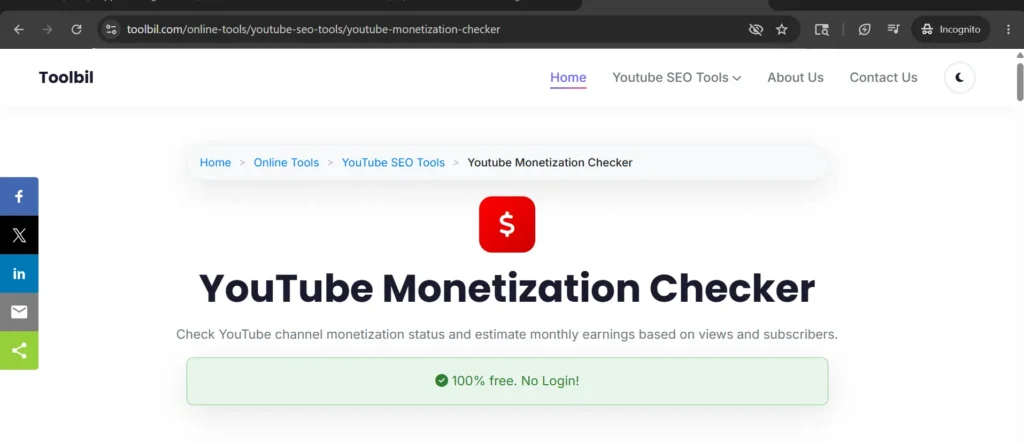
    Go to toolbil.com ->YouTube Monetization Checker. The page will load with a simple input box. That’s it. No signup, no pop ups.

    Toolbil YouTube Monetization Checker tool homepage

    Step 2 : Copy the YouTube Channel URL

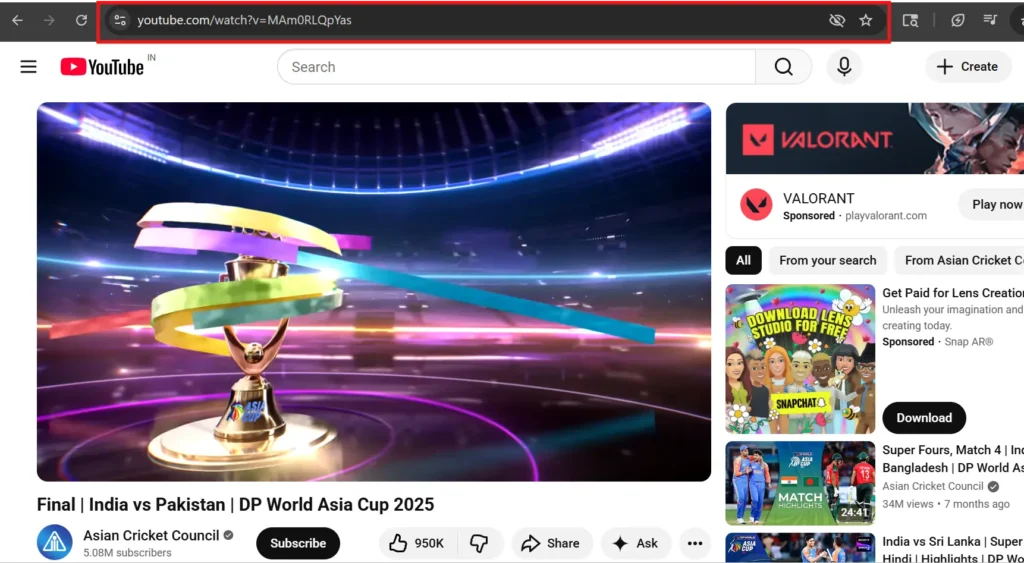
    Open YouTube in another tab. Go to the channel you want to check. Look at the web address bar at the top of your browser that’s the channel URL.

    It will look something like this:

    • https://www.youtube.com/@channelname
    • https://www.youtube.com/channel/UCxxxxxxxx

    Click on that address and copy it (Ctrl+C on Windows, Cmd+C on Mac).

    How to copy a YouTube channel URL from the browser address bar

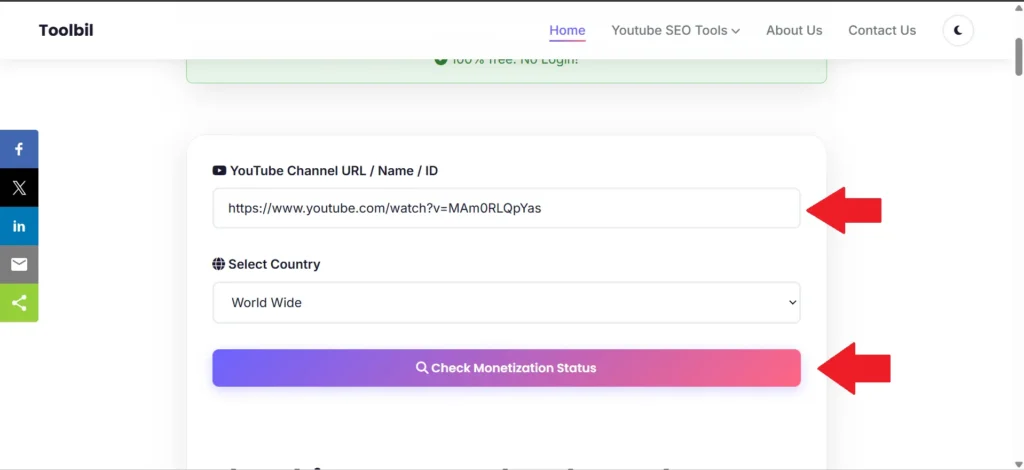
    Step 3 : Paste the URL and Click Check

    Go back to the Toolbil tool. Paste the channel URL into the input box (Ctrl+V or Cmd+V). Then click the Check Monetization Status button.

    Paste the YouTube channel URL into the Toolbil monetization checker
    Paste the channel URL into the box and hit Check it only takes a second.

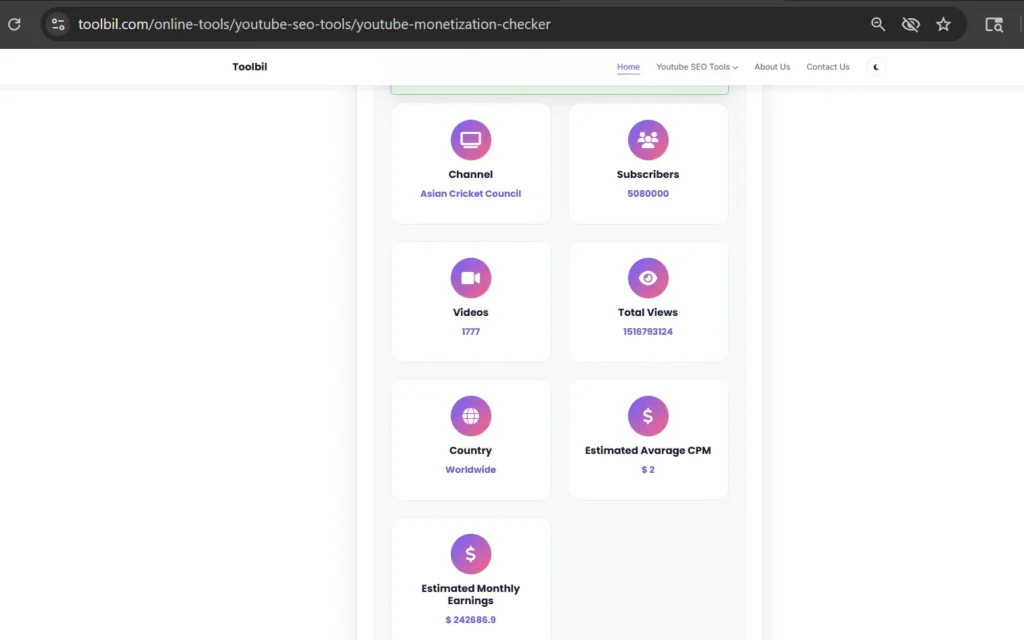
    Step 4 : See Monetization Results

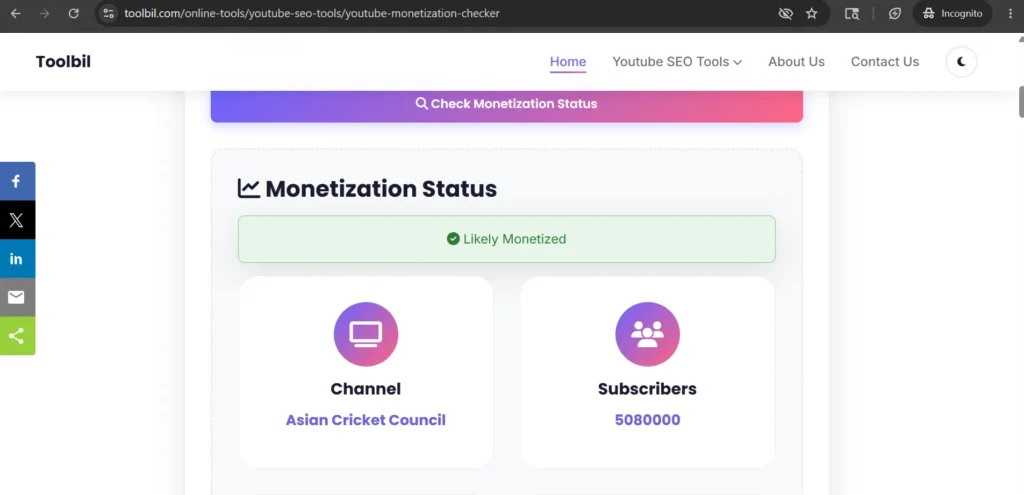
    In just a few seconds, you will see a full report on that channel. You’ll know right away if the channel is monetized or not.

    YouTube Monetization Checker results showing monetization status and estimated earnings
    Your results show up instantly monetization status, estimated earnings, subscriber count, and more.

    💡 Helpful tip: Once you know a channel is monetized, you can dig even deeper. Use our YouTube Video Data Extractor to see the exact tags and keywords that channel uses on their best performing videos.

    Method 2 : Look for Clues Directly on YouTube

    You can also check without any tool just by looking at the channel on YouTube. These are not 100% confirmed results, but they are strong clues.

    Here’s what to look for:

    • Ads playing on their videos : If you see an ad before or during a video, that channel is almost certainly monetized. Non monetized channels can’t run ads.
    • A “Join” button next to Subscribe :This is the Channel Memberships button. Only channels in the YouTube Partner Program can have this.
    • A “Thanks” button below videos : This is the Super Thanks feature. Again, only YPP members can use it.
    • A merchandise shelf below videos : If you see products listed below a video, the channel is monetized.

    The downside of this method? Some creators turn ads off on certain videos. Or they might have memberships disabled. So you could look at a monetized channel and see none of these signs.

    That’s why the Toolbil YouTube Monetization Checker is more reliable it checks the actual channel data, not just what you can see on screen.

    Method 3 : Check Your Own Channel via YouTube Studio

    This method only works for your own channel. You can’t use it to check someone else’s.

    Here’s how:

    1. Go to studio.youtube.com and log in.
    2. In the left menu, click on Earn (sometimes called Monetization).
    3. You’ll see your current status either “Not eligible yet”, “In review”, or “Likely Monetized”.

    That’s it for your own channel. But if you want to check any other channel, you’ll need Method 1.

    What Information Does the Toolbil Tool Show You?

    Most free tools just tell you “yes” or “no.” Our YouTube Monetization Checker gives you a lot more than that.

    Here’s what you get in your results:

    • Monetization Status : A clear “Monetized” or “Not Monetized” result. No guessing.
    • Estimated Monthly Earnings : A realistic earnings range based on the channel’s niche, view count, and average CPM rates. Not the exact amount, but a solid ballpark figure.
    • Subscriber Count : How many subscribers the channel currently has.
    • Total Videos Published : How many videos they have uploaded in total.
    • Channel Creation Date : When the channel was first created. This helps you understand how long it took them to grow.

    And remember : all of this is completely free. No account, no credit card, no tricks.

    YouTube Partner Program Requirements in 2025

    Want to get your own channel monetized? Here’s exactly what you need.

    YouTube actually has two levels of the Partner Program now. Here’s how they compare :

    RequirementStandard YPP (full)Expanded YPP (fan funding only)
    Subscribers needed1,000+500+
    Watch hours (12 months)4,000 hours3,000 hours
    Shorts views (90 days)10 million3 million
    Can run ads on videos✅ Yes❌ No
    Channel memberships✅ Yes✅ Yes
    Super Thanks✅ Yes✅ Yes

    The expanded YPP tier is newer. It lets smaller channels earn through memberships and fan donations before they hit the 1,000 subscriber mark. But to run actual ads on your videos, you still need the full Standard YPP.

    You can check the official YouTube Partner Program requirements page for the most up to date information.

    How to Use This to Grow Your Own Channel

    Knowing that a channel is monetized is useful. But knowing what to do with that information is even better.

    Here’s how to turn it into action:

    • Find the keywords they rank for : Once you’ve identified a monetized channel in your niche, use our free YouTube Tag Generator to discover the kind of keywords that work in that niche.
    • Study their thumbnails : Monetized channels have usually figured out what kind of thumbnails get clicks. You can download any thumbnail for free using our YouTube Thumbnail Downloader and use it as inspiration for your own.
    • Find out what brands would pay : Wonder what a monetized creator in your niche earns from sponsorships? Use our YouTube Sponsorship Calculator to estimate brand deal rates based on subscribers and views.

    Frequently Asked Questions

    Can I check someone else’s YouTube channel monetization status?

    Yes, absolutely. The Toolbil YouTube Monetization Checker works for any public YouTube channel not just your own. Just paste their channel URL and you’ll get the result right away.

    Is this tool really free? Is there a catch?

    It’s completely free. No account needed, no credit card, no hidden charges. You can check as many channels as you want without any limits.

    How accurate are the results?

    The monetization status check is very accurate for most channels. It looks at real channel signals to determine YPP status. The estimated earnings are a realistic range not an exact figure, since actual earnings depend on the viewer’s country, niche CPM rates, and how many ads the viewer watches.

    What if a channel shows “not monetized” but I can clearly see ads on their videos?

    This can happen in rare cases usually when a channel was very recently approved and the data hasn’t updated yet. If you see ads playing on a video, that channel is monetized. The tool result will catch up within a day or two.

    Will the channel owner know I checked their monetization status?

    No. Checking a channel on Toolbil is completely private. The channel owner gets zero notification. You can check any channel without them ever finding out.

    Can I check a YouTube Shorts channel too?

    Yes. Channels that mainly post YouTube Shorts can also be in the Partner Program. The tool checks the overall channel status, so it works for Shorts channels, long form video channels, and mixed channels too.

    How much does a small monetized YouTube channel actually earn?

    It varies a lot by niche. A small channel with around 1,000 to 5,000 subscribers might earn anywhere from $5 to $50 per month from ads. Finance and tech channels earn much more per view compared to entertainment or vlog channels. The more views you get, the more you earn it’s that simple.

    Ready to Check a YouTube Channel?

    Now you know exactly how to check if a YouTube channel is monetized and you have three different ways to do it.

    The fastest and most detailed way is always the Toolbil YouTube Monetization Checker. It’s free, instant, and gives you way more information than just a yes or no answer.

    Go ahead and try it right now paste any YouTube channel URL and see what you get. And while you’re at it, explore all our free YouTube SEO tools to help you grow your channel faster.